Source modern design coffee organizer cup and lid dispenser for shops, homes, and cafes
Compare 30 listings for a modern design coffee organizer cup and lid dispenser suitable for supermarkets, cosmetic stores, and home use. These acrylic and plastic units feature slanted racks and desktop stands for efficient cup and lid storage.
Key considerations
Products List











Comprehensive Sourcing Guide
Strategic Sourcing Guide for Modern Design Coffee Organizers and Cup Dispensers
Defining the Product Category and Functional Requirements
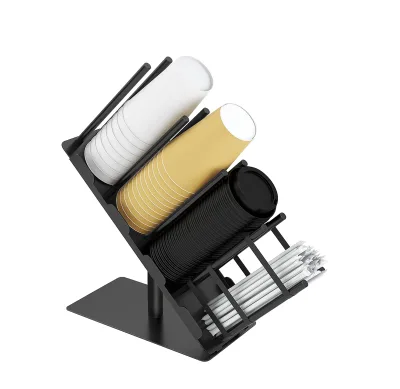
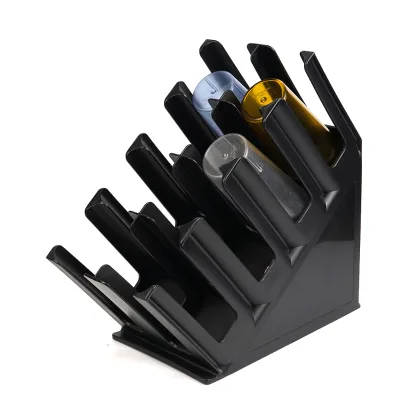
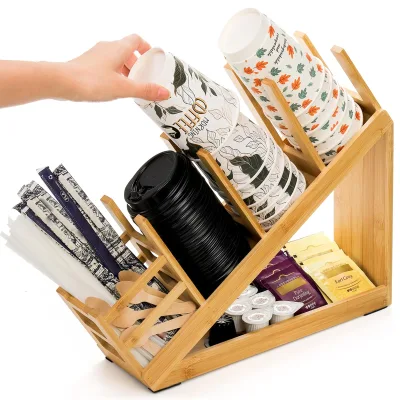
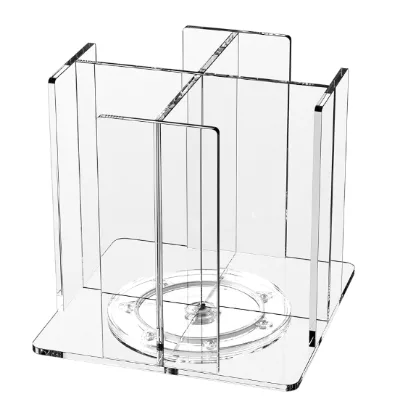
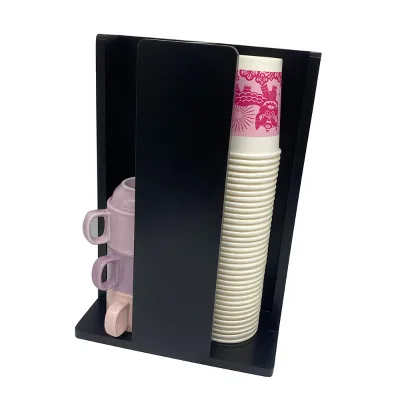
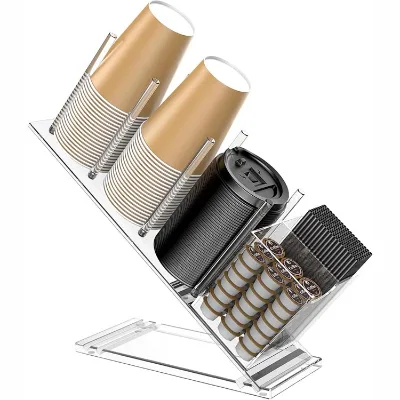
The core keyword "modern design coffee organizer cup and lid dispenser" refers to a specialized class of storage solutions designed for high-volume beverage environments. These units are engineered to maximize countertop efficiency while maintaining a streamlined aesthetic. Based on current market observations, these products function primarily as cup organizers, lid stands, and dispensers for takeout boxes and plastic lids. The design philosophy centers on "slanted" configurations, which utilize gravity to present cups or lids in an accessible manner, reducing the need for manual retrieval and minimizing clutter.
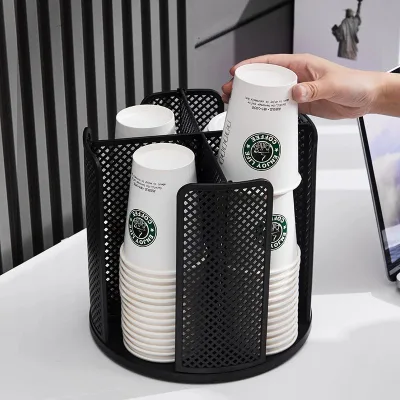
In a B2B context, the functional requirements extend beyond simple storage. Buyers must evaluate products that serve as "countertop cup racks" or "desktop cup racks" capable of handling various vessel types, including paper cups, plastic cups, and lids. The observed product attributes indicate that these units are frequently categorized as "cup holders" or "cup stands" with specific features such as "slanted cup dispensers" and "slanted lid holders." The structural integrity of these units is critical, as they must support the weight of stacked cups without tipping, particularly in busy settings like supermarkets, specialty stores, and exhibition shows. The "standing type" installation is the predominant configuration, ensuring stability without the need for wall mounting or adhesive, which is essential for temporary setups or retail environments where surface modifications are restricted.
Technical Specifications and Material Composition
When evaluating the technical specifications of modern coffee organizers, material selection is the primary determinant of durability, aesthetics, and cost. The market data reveals a bifurcation in material usage, with "acrylic" and "plastic" being the two dominant categories. Acrylic products are often highlighted for their transparency and premium finish, aligning well with "modern design" requirements. These units are frequently described as "acrylic cup holders" or "acrylic cup stands," offering a sleek, glass-like appearance that enhances the visual appeal of a coffee shop or cosmetic store. Conversely, plastic variants provide a robust, cost-effective alternative, often utilized in high-traffic areas where durability is prioritized over transparency.
Dimensional specifications vary significantly across models, ranging from compact desktop units to larger commercial racks. Specific model numbers such as A0125, A0124, and HZM-Z1034 indicate that manufacturers offer distinct configurations to meet diverse spatial needs. Buyers should note that "large" size options are available, alongside specific dimensional standards like 470x110x210mm for certain models. Tolerance levels are a critical technical metric; observed data suggests a dimensional tolerance of less than ±1mm, which ensures that components fit together precisely and that the unit maintains its structural alignment. Weight tolerance is also a factor, with some specifications noting a variance of less than ±1%, indicating a focus on consistent manufacturing quality.
The number of layers is another key specification, with "four-layer" configurations being a common observation. This multi-tiered approach allows for the separation of different cup sizes or the organization of lids and cups in distinct zones. The "non-folding rack" classification suggests that these units are rigid structures, which generally offer greater stability than collapsible alternatives. The shape is typically described as "common," implying a standard rectangular or square footprint that fits easily into existing shelving or counter layouts.
Compliance, Certification, and Safety Standards
In the realm of B2B procurement for food-contact or retail display items, compliance and safety standards are paramount. While specific certification labels are not universally present in all product listings, buyers must verify that materials used in the construction of cup and lid dispensers meet local food safety regulations. Since these units are often used in "makeup shops," "cosmetic stores," and "coffee shops," they may come into contact with food or beverages. Therefore, the plastic or acrylic materials must be non-toxic and free from harmful substances that could leach into cups or lids.
The "customized" standard noted in product data suggests that manufacturers may offer tailored compliance solutions, but buyers should explicitly request documentation regarding material safety. For products originating from regions like Ningbo or Guangdong, China, it is essential to ensure that the manufacturing processes adhere to international quality management systems. Although specific certification names are not provided in the general data, buyers should inquire about ISO certifications or specific food-grade material certifications (such as FDA or EU compliance) depending on the target market.
Additionally, the "antitheft" attribute is explicitly noted as "not antitheft" for many of these units. This is a crucial compliance and security consideration for retail environments. Buyers must assess whether the design of the organizer poses a theft risk or if additional security measures, such as locking mechanisms or secure mounting, are required to protect the inventory. The lack of built-in anti-theft features means that the procurement strategy must include a risk assessment for the specific deployment location, such as high-theft areas in supermarkets or exhibition shows.
Cost Drivers and Pricing Dynamics
The pricing structure for modern coffee organizers is influenced by several key factors, including material composition, customization levels, and order volume. The observed price range in the market spans from $0.96 to $130 USD, reflecting a wide spectrum of product tiers. The lower end of this range typically corresponds to basic plastic models with standard dimensions and minimal customization. In contrast, the higher price points are associated with premium acrylic units, complex multi-layer designs, or customized branding options.
Material costs are a primary driver, with acrylic generally commanding a higher price than standard plastic due to its superior clarity and perceived value. Customization is another significant cost variable; the "OEM" (Original Equipment Manufacturer) and "customized" attributes indicate that buyers can request specific branding, colors, or dimensions. These custom orders often incur additional setup fees and higher per-unit costs, particularly for small order quantities. The "sample offer" availability suggests that buyers can test product quality before committing to large volumes, which is a prudent strategy for managing cost risks.
Order volume plays a critical role in determining the final unit price. The observed MOQ (Minimum Order Quantity) ranges from 1 to 10,000 units. Buyers purchasing small quantities may face higher per-unit costs, while those ordering in bulk can leverage economies of scale to reduce expenses. The "small order within 25 days" delivery time indicates that even smaller batches can be fulfilled relatively quickly, though lead times may extend for larger, customized orders. Packaging costs, such as "bubble bag" or "PP clean bag package and carton box," also contribute to the overall price and should be factored into the total cost of ownership, especially for international shipping.
Typical Applications and Deployment Scenarios
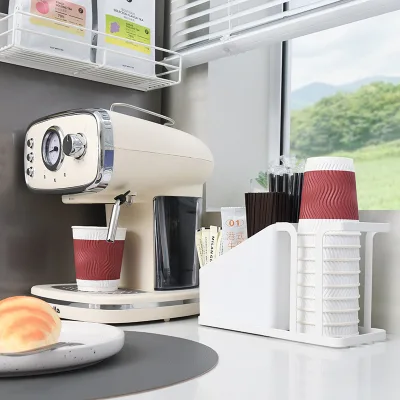
The versatility of modern coffee organizers allows them to be deployed across a wide array of commercial and institutional settings. The primary application is in "coffee shops" and "cosmetic stores," where the aesthetic appeal of the unit complements the brand image. The "slanted cup dispenser" and "slanted lid holder" features are particularly valuable in these environments, as they facilitate rapid service and reduce the time staff spend retrieving cups. The "desktop cup rack" functionality makes these units ideal for counters with limited space, allowing for efficient organization of takeaway orders.
Beyond food and beverage service, these organizers are suitable for "exhibition shows" and "specialty stores." In exhibition settings, the ability to quickly dispense promotional cups or lids can enhance the visitor experience. The "indoor" display place attribute confirms that these units are designed for controlled environments, protecting the materials from weathering and UV degradation. The "all-season" classification suggests that the units are durable enough for year-round use in climate-controlled indoor spaces.
The "kitchen" is another relevant application space, where these racks can organize supplies in commercial or institutional kitchens. The "standing type" installation ensures that the units remain stable on various countertop surfaces, from stainless steel to laminate. The "four-layer" design allows for the segregation of different items, such as separating lids from cups or organizing different sizes of vessels. This organizational capability is essential for maintaining hygiene and efficiency in high-volume environments.
Supplier Evaluation and Quality Control Protocols
Selecting the right supplier is critical for ensuring product quality and reliability. Buyers should prioritize suppliers who offer "OEM" services and demonstrate a commitment to "customized" solutions. The presence of specific model numbers and detailed specifications, such as "dimensional tolerance <±1mm," indicates a level of manufacturing precision that buyers should expect. When evaluating potential suppliers, it is important to verify their production capabilities, particularly their ability to maintain consistent quality across large batches.
Quality control protocols should be a central part of the procurement process. Buyers should request samples to assess the finish, stability, and material quality of the units. The "sample offer" attribute suggests that many suppliers are willing to provide samples, which is an excellent opportunity to verify the "acrylic" or "plastic" quality firsthand. Inspecting the packaging, such as "bubble bag" or "PP clean bag package," is also essential to ensure that the products arrive in good condition.
Suppliers located in "Ningbo" or "Guangdong, China" are common in this sector, but buyers should not rely solely on location. Instead, they should focus on the supplier's track record, production capacity, and ability to meet specific standards. The "brand name" attribute, such as "JQ," indicates that some suppliers have established brand identities, which can be a proxy for reliability. However, buyers should remain vigilant and conduct due diligence to ensure that the supplier can consistently deliver products that meet the required specifications and quality standards.
Long-Term Procurement and Supply Chain Considerations
For long-term success, buyers must consider the scalability and flexibility of their supply chain. The "customized" nature of these products means that suppliers must be able to adapt to changing design requirements or branding needs. The ability to produce "small orders within 25 days" is a significant advantage for businesses that need to respond quickly to market demands or seasonal fluctuations. However, buyers should also plan for the lead times associated with larger, customized orders, which may require more extensive production planning.
Sustainability and material lifecycle are becoming increasingly important in B2B procurement. While the specific environmental certifications are not detailed in the general data, buyers should inquire about the recyclability of the acrylic or plastic materials used. The "single item" selling unit and "single" packaging options suggest that some suppliers are moving towards more efficient packaging strategies, which can reduce waste and shipping costs.
Finally, buyers should establish clear communication channels with their suppliers to ensure that any changes in specifications or requirements are addressed promptly. The "dimensional tolerance" and "weight tolerance" specifications provide a baseline for quality, but ongoing monitoring and feedback loops are necessary to maintain product consistency. By focusing on these long-term considerations, buyers can build a resilient supply chain that supports their operational needs and brand goals.
FAQs
What materials are used for modern design coffee organizer cup and lid dispensers?
These units are primarily constructed from acrylic or plastic. Acrylic offers a transparent, premium finish suitable for cosmetic stores, while plastic provides a robust, cost-effective alternative for high-traffic environments like supermarkets.
Can buyers request customization for these cup organizers?
Yes, customization is available for these products. Buyers can request OEM services and tailored standards, with specific model numbers like A0125 indicating distinct configurations to meet diverse spatial and branding needs.
How long does delivery take for small orders of these racks?
Small orders are typically delivered within 25 days. This lead time applies to standard batches, though customized orders may require additional processing time depending on the specific manufacturing capacity and order volume.
Which installation types are available for countertop cup racks?
The predominant configuration is a standing type installation. These units are designed as non-folding racks that remain stable on countertops without requiring wall mounting or adhesive, making them ideal for temporary setups.
What is the typical price range for these cup dispensers?
The observed price range spans from 0.96 to 130 USD. Lower prices usually correspond to basic plastic models, while higher costs reflect premium acrylic units, complex multi-layer designs, or customized branding options.
Where are these cup organizers typically manufactured?
Manufacturing origins include Ningbo and Guangdong, China. These locations are common hubs for producing acrylic and plastic storage solutions, ensuring consistent quality and adherence to specific dimensional tolerances for the final product.
Are these cup holders suitable for exhibition shows?
Yes, these units are explicitly designed for use in exhibition shows. Their slanted cup dispenser features facilitate rapid service in high-volume settings, and the indoor display place attribute ensures durability in controlled environments.